Interface ICs are essential components in modern electronic systems, enabling communication between different devices, subsystems, and protocols. From industrial automation to IoT and embedded platforms, interface integrated circuits ensure reliable data transmission across increasingly complex environments.
For engineers and procurement professionals, selecting the right interface IC is not only a technical decision but also a key factor in system reliability, cost control, and long-term supply stability.
What Are Interface ICs
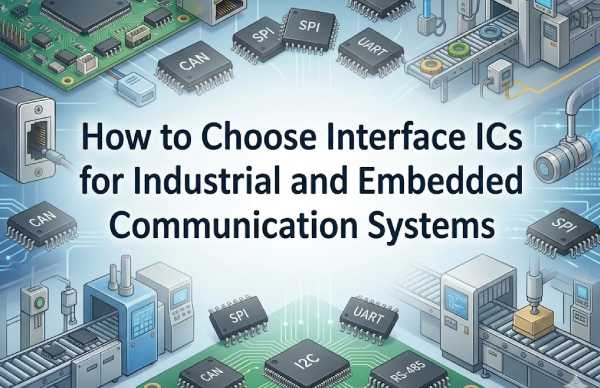
Interface ICs are designed to connect and translate signals between different communication standards. They act as bridges between processors, sensors, and external systems, ensuring compatibility and data integrity.
Common types of interface ICs include:
RS-232 and RS-485 transceivers
CAN bus transceivers
USB interface ICs
I2C, SPI, and UART interface devices
Ethernet PHY chips
Each type serves a specific communication requirement, depending on speed, distance, noise immunity, and system architecture.
Key Applications of Interface ICs
Industrial Automation
In industrial environments, communication must remain stable despite electrical noise and long transmission distances. Interface ICs such as RS-485 and CAN transceivers are widely used because of their robustness and differential signaling capabilities.
Typical applications include:
PLC systems
Motor control units
Factory automation networks
Embedded Systems and IoT Devices
Embedded systems rely on multiple communication protocols to connect sensors, microcontrollers, and peripherals. Interface ICs enable seamless integration across these components.
For example:
I2C and SPI for short-distance board-level communication
UART for simple serial communication
USB for external connectivity
As IoT devices scale, efficient interface design becomes critical for power consumption and system performance.
Automotive and Transportation Systems
Modern vehicles depend heavily on communication networks such as CAN and LIN. Interface ICs in automotive systems must meet strict reliability and safety standards.
They are commonly used in:
Electronic control units (ECUs)
Battery management systems
In-vehicle networking
Key Selection Factors for Interface ICs
Choosing the right interface IC requires balancing technical specifications with sourcing considerations.
1. Communication Standard
The first step is selecting the appropriate protocol:
RS-485 for long-distance and industrial communication
CAN for automotive and robust multi-node systems
USB or Ethernet for high-speed data transfer
Each protocol has trade-offs in speed, complexity, and cost.
2. Data Rate and Transmission Distance
Different applications require different performance levels:
High-speed applications (e.g., Ethernet, USB) prioritize bandwidth
Long-distance communication (e.g., RS-485) prioritizes signal integrity
Understanding system requirements helps avoid over-specification or underperformance.
3. Noise Immunity and Reliability
In harsh environments, electrical noise can disrupt communication. Differential signaling technologies used in RS-485 and CAN provide higher noise immunity, making them suitable for industrial and automotive use.
4. Power Consumption
For battery-powered or energy-sensitive applications, low-power interface ICs are essential. This is particularly important in IoT devices where efficiency directly impacts device lifespan.
5. Package and Integration
Compact designs often require smaller packages or highly integrated solutions. Some interface ICs include additional features such as:
Built-in protection circuits
Fault detection
Thermal shutdown
These features can reduce external component count and improve system reliability.
Sourcing Challenges in the Interface IC Market
Despite being widely used, interface ICs can present sourcing challenges:
Long lead times during supply shortages
Lifecycle changes or product discontinuation
Variations in quality and traceability across suppliers
Procurement teams must carefully evaluate suppliers and maintain flexibility in sourcing strategies.
Practical Sourcing Strategies
To ensure stable supply and reduce risk, consider the following approaches:
Diversify Supply Channels
Avoid relying on a single source. Establish multiple qualified suppliers or distributors.
Evaluate Alternatives Early
Identify pin-to-pin or functionally compatible alternatives during the design phase.
Monitor Lifecycle Status
Stay updated on Product Change Notifications (PCN) and End-of-Life (EOL) announcements to avoid unexpected disruptions.
Prioritize Quality and Traceability
Ensure that sourced components meet required standards and come with verified documentation.
Conclusion
Interface ICs are critical to enabling reliable communication in modern electronic systems, from industrial automation to IoT and automotive applications. Selecting the right component requires a clear understanding of technical requirements as well as market conditions.
For procurement professionals, combining engineering insight with strategic sourcing practices is essential to maintaining system performance and supply continuity. By working with experienced distribution partners like Perceptive Components, companies can access a broad range of interface IC solutions while ensuring quality, availability, and long-term support in a dynamic global market.